

Indian planning in the aftermath of the fall of Jhangar
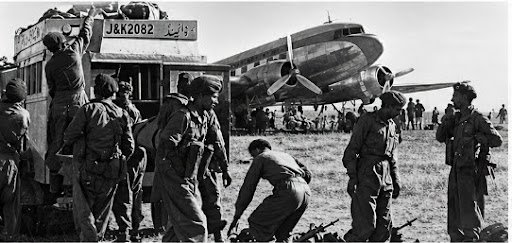
The setback at Jhanger led to a review of the situation and some important administrative changes. In order to accurately appreciate the situation, it is necessary to bear in mind the relative strengths of the opposing forces. The Indian forces comprised one division of four brigades – Headquarters, Jammu and Kashmir Division was at Jammu, 80 Brigade at Akhnoor, 50 Para Brigade at Naushahra, Poonch Brigade at Poonch and 161 Brigade at Uri. The enemy was vastly superior in numbers then. In the Uri sector, enemy numbers had swollen to 13,000 with about 6000 in the Muzaffarabad area. About 1000 raiders were present in the Poonch sector. In the Naushahra area, the approximate enemy strength was 10,000 while 5,000 raiders were estimated to be in the Jammu sector. Around 500 raiders were believed to be in Akhnoor sector.
Immediately after the fall of Jhangar, Major-General Kulwant Singh analysed the situation. He had then, at his disposal, 15 Indian infantry battalions and 2 State Force battalions, a machine gun battalion, an armoured car regiment, one field regiment (2 batteries) and a mountain regiment (4 batteries). The average strength of his brigade groups, with the exception of 161 Brigade, was approximately 2000. The enemy was superior in strength especially in the Uri and Naushahra sectors. On account of the good road, leading from Mansehra to Muzaffarabad, the enemy could build up its forces against Uri. As that position was strong, it was capable of holding up an advance from Domel.
The Poonch garrison was weak, and unless reinforced immediately, could not have held on for long against a major attack. The Naushahra garrison had suffered heavy casualties and required immediate reinforcements. Beri Pattan was weakly defended and needed strengthening. In order to stop enemy concentrations in the southern sector, it was essential to recapture Bhimbar and Mirpur as early as possible. Immediate air action to destroy the bridges at Domel, Kohala and Lachman Pattan and engaging enemy concentrations at Domel, Mirpur and Jhangar was necessary.
Four possible courses of action were open to the enemy
(1) to try and dislodge the Indian troops from Uri, or to cut the Uri-Baramulla road and lay a siege to Uri
(2) to capture Poonch,
(3) to by-pass Naushahra, capture Beri Pattan and then invade Naushahra with a view of capturing it,
(4) to attack Jammu.
Out of these possible paths, the enemy was likely to cut the Uri-Baramulla road and lay a siege to Uri, as he knew that there were not many Indian troops between Baramulla and Uri.
He also realised the importance of capturing Beri Pattan to cut off Naushahra. In view of these possible developments, Major-General Kulwant Singh’s intention was to hold on to the firm bases, patrol extensively from them and give the enemy a knock-out blow as quickly as possible in the Naushahra sector. The outline of his plan was as follows:
(1) To reinforce the Uri sector with one battalion immediately, patrol extensively and dominate the line of communication.
(2) To reinforce the Poonch garrison with one battalion as soon as possible and to evacuate, by air, all civilian women and children without delay.
(3) To secure the line of communication between Jammu-Naushahra, hold Beri Pattan and Naushahra at all costs and organise a brigade group for the recapture of Jhangar at the earliest opportunity.
(4) To hold, at all costs, the bridge over the river Chenab at Akhnoor and to build up forces at Chhamb with a view of capturing Bhimbar.
(5) To hold Jammu at all costs.
(6) To recapture Mirpur after Jhangar and Bhimbar had been secured.
(7) To relieve Poonch after Bhimbar and Mirpur had been recaptured.
Major-General Kulwant Singh’s assessment was taken due note of at the Army Headquarters at New Delhi. General Lockhart’s appreciation was that the enemy would make increasingly strenuous efforts-
(1) to prevent Indian forces from securing Poonch or Mirpur,
(2) to drive back the Indian forces from their advanced positions in Uri, Poonch town and Naushahra,
and
(3) to capture Srinagar.
It would seek to attain these objectives by harassing posts and detachments, raiding the line of communication and villages and towns in different places to create panic. Raids would be made, sometimes at one end of the front, sometimes at the other, sometimes in the middle. It would, therefore, be unwise to concentrate Indian troops on one portion of the front to meet a specific threat and leave other portions lightly held.
Although the enemy possessed mobility, and in certain places the support of the local population too, they also had difficulties, e.g. , a lack of aircraft, an absence of supporting arms, and in Poonch the handicap of snow hindering movement.
Forces in the Uri sector were not strong enough to undertake an advance towards Domel and at the same time to ensure the defence of Uri and to prevent the line of communication being cut. The task in Uri would, therefore, be to consolidate the position, prevent tribal infiltration on to the line of communication and take offensive action on a limited scale whenever suitable opportunities presented themselves. Poonch town would have to be held at all costs, and early steps taken to recapture Jhangar and open the line of communication – Jhangar-Kotli-Poonch. In order to maintain the garrison in Punch, a threat would be developed from Chhamb to Bhimbar. The security of Jammu town would be ensured. It was necessary that Indian forces retain the initiative, and having due regard to the principle of security, act vigorously at all times and inflict the heaviest casualties possible on the invaders.
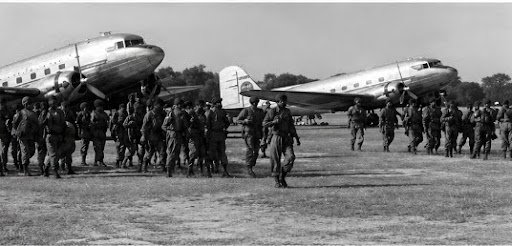
The air element acting in support of the Jammu & Kashmir Division comprised eight Tempests, seven Harvards, and two Dakotas at Jammu, in addition to six Tempests at call from Delhi when weather conditions rendered the Jammu airfield unserviceable. These were enough to support the ground forces in the execution of tasks. Apart from these, transport aircraft were available for maintenance, by air, up to a maximum of six sorties a day on a short haul.
The urgent problem of reinforcing the Jammu and Kashmir Division was considered at the Chiefs of Staff Conference held on 27 December. It was agreed to strengthen the Jammu and Kashmir Division with an additional brigade from Brigade HQ with three infantry battalions, one squadron of armoured cars and one field company. Of the three infantry battalions, two were earmarked by Delhi-East Punjab Command as follows:
(1) 1st Battalion the Indian Grenadiers (then with 5 Brigade at Ludhiana)-for Uri
(2) Either 2 (Para) Madras or 3/9 Gorkha Rifles (with Delhi Area)-to reinforce Poonch garrison.
The third battalion was to be detailed by Army Headquarters from outside Delhi-East Punjab Command for Srinagar. The Conference also took into consideration the maintenance problem. These reinforcements would put a heavy strain on the supply system which was already far from satisfactory and had not reached target figures owing to bad weather and a continued increase in strength. The Banthal Pass was snow-bound and the airstrip at Srinagar, temporarily unserviceable. Poonch was entirely dependent on air supply.
Only two Royal Indian Air Force Dakotas were then available at Jammu for the supply lift. This number was completely inadequate, and unless supplemented immediately, a very difficult and probably dangerous situation might arise. Lieutenant-General Russell, therefore, suggested that 15 Dakotas might be purchased by the Royal Indian Air Force at once. They should be modified for the dropping of supplies immediately and placed in support of the Delhi-East Punjab Command. Further, in view of increased commitments, the existing arrangements for carrying supplies and stores to Jammu by civil aircraft would have to be continued.
Lieutenant-General Russell made two other suggestions. Firstly, as the Indian troops in Kashmir were then considerably more than an Infantry Division, it would be desirable to change the name of this force from Jammu and Kashmir Division to Jammu and Kashmir Force. Secondly, it would be necessary to establish a satisfactory line of communication and organisation for the Jammu & Kashmir Force.
Another consequence of the loss of Jhangar was the emphasis placed upon the raising of irregular forces. As more and more troops poured into Kashmir to meet the mounting enemy threat, Army Headquarters realised the necessity of raising irregular forces to supplement the work of the regular forces. Immediately after the loss of Jhangar, it was decided to raise such forces. Major-General Thimayya, Commander East Punjab Area, was ordered to raise six Frontier Constabulary battalions from East Punjab, three of which were to be raised immediately. He was also to raise an irregular force, 10,000 strong, part of which would be placed at the disposal of Major-General Kulwant Singh, if the need arose. A force of 10,000 irregulars was to be raised in Jammu and Kashmir from ex-servicemen. The ruler of Patiala was also to raise another infantry battalion.
The events leading to the loss of Jhangar showed distinctly that the intelligence organisation was faulty. The Prime Minister, in a letter to General Lockhart, suggested that information could only be obtained by co-operating with Bakhshi Ghulam Mohammad’s men. Up-to-date and accurate intelligence was vital to the success of the operations in Kashmir. The intelligence staff authorised for the Jammu and Kashmir Division was insufficient to deal efficiently with this task. Hence, Lieutenant-General Russell prepared a scheme for the establishment of an Intelligence Bureau, whose tasks would be to establish a prisoners’ cage at Jammu, conduct interrogation and final disposal, collate information from civil sources, and to arrange liaison visits to units. The Bureau would be under Delhi-East Punjab Command and would work in close liaison with the Jammu & Kashmir Division.
The loss of Jhangar also laid stress upon the necessity of a satisfactory line of communication organisation. Originally, troops were flown into Jammu and Kashmir State at short notice. Since then, there had been considerable reinforcements of troops. No detailed planning was possible before the operations commenced, and none had been possible since. Decisions made had been political rather than military. Consequently, the military plan had to be adjusted, at very short notice, to meet these political considerations. As a result, the administration of the Jammu and Kashmir Division had been built up day by day, as the rapidly changing situation demanded, and not in accordance with a carefully considered initial administrative appreciation.
No staff for administrative installations had been forthcoming, because of a shortage of suitably qualified and experienced officers. This state of affairs was obviously most unsatisfactory. Hence, on 29 December Lieutenant-General Russell recommended the setting up of an L of C organisation for the following special reasons :
(1) The portion of the line of communication from Pathankot to Jammu lay partly in the East Punjab Area and partly in the Jammu & Kashmir Division. There was no controlling authority for this vital link as a whole. This had led to misuse of transport, dispatch of unbalanced commodities and a general lack of control.
(2) The commander of the Jammu & Kashmir Division, whose engineering and administrative responsibilities had then outgrown the capacity of his staff, had his attention considerably distracted from the main operations by the necessity of watching the line of communication from Jammu to Pathankot.
(3) It was vital to the success of the operations that really efficient communications between Pathankot and Kashmir be established without delay. This was only possible if an L of C organisation was put in place at once.
(4) The bad roads in Kashmir called for a systematic, rapid and methodical build up, so that the forces in the State were satisfactorily maintained.
As a result of this recommendation, Army Headquarters sanctioned an L of C Sub Area for Pathankot. The intention was to organise Pathankot into an Advance Base, a second-in-command for Jammu & Kashmir. Force was sanctioned and an administrative commandant was also authorised for Srinagar. Long term planning provided for an Area Headquarters in Jammu and Sub Areas as necessary.
Another vital problem was to stimulate the battalion and brigade commanders to be as offensive and imaginative in their operations as they could be. When Brigadier J.N. Chaudhuri, Director of Military Operations and Intelligence, visited Jammu on 15 January 1948 and had discussions with Major-General Kulwant Singh regarding the military situation in Jammu and Kashmir, he got the impression that though the morale of the men was fairly high, that of the officers was not so high.
The commanders were sometimes timid in their offensive patrolling, while some of them even forgot elementary principles of warfare. For instance, picquets outside one camp were not stocked with reserve ammunition. Brigadier Chaudhuri, with whose views Major – General Kulwant Singh concurred, suggested suitable gallantry awards (in place of commendation cards) to raise the morale of the officers. As a result of this detailed discussion, some of these defects were removed and the Indian Army in Kashmir turned to the task of driving out the raiders from Jammu and Kashmir with renewed energy.
THE BALANCE-SHEET
The short period of two weeks-10 December to 26 December- was crowded with dramatic incidents. Indian troops were the first to strike by driving out the enemy from Chhamb on 10 December and by developing a thrust towards Rajouri on 16 December. The Royal Indian Air Force made a notable contribution by carrying supplies, artillery and ammunition to the garrison at Poonch, thus enabling them to withstand the enemy assaults. In the Uri sector, the enemy’s skilful tactics lured 1 Sikh into an ambush, resulting in heavy losses. The destruction of a convoy west of Sadhot on 19 December, followed by the ambush of 2 Jat at Sadhot, showed the successful guerilla tactics adopted by the hostiles.
The creation of the roadblocks on road Naushahra-Jhangar on 23 December, followed by the successful attack on Jhangar on 24 December, showed the excellent planning and resourcefulness of the enemy. Though the attack on Naushahra was repulsed on 26 December, the enemy had certainly regained the initiative and had struck telling blows, which had considerably raised its morale. The enemy had the advantage of shorter lines of communication and they exploited it well. Yet these weeks were memorable also for the bravery and courage displayed by the Indian troops, especially on four occasions. Who can ever forget the reckless courage of the Sikhs and the Jats while they were ambushed at Bhatgiran and Sadhot respectively?
Again, who can ever forget the exploits of A squadron 7 Cavalry as they fought for over 24 hours with grim determination against tremendous odds on the Naushahra-Jhangar road? The heroism of the handful of Mahar machine gunners at Jhangar who continued to fire and take a heavy toll of the enemy till they were cut to pieces at their posts was unparalleled in any army. These exploits are a rich heritage and their memory will forever remain green.
(Excerpts have been taken from “History of Operations in Jammu and Kashmir 1947-48”)