

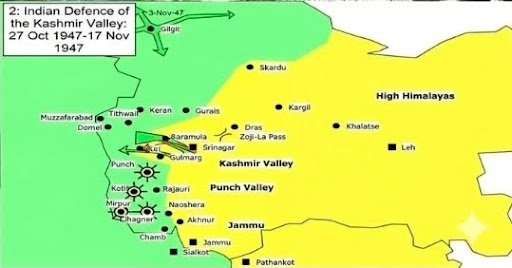
The fall of Muzaffarabad on October 22, 1947 is the darkest event in the history of the India- Pakistan conflict over Jammu and Kashmir. It marked the beginning of heinous atrocities and killings of innocent civilians in the region by Pakistani forces after the partition of India in 1947. The events in the Kashmir valley are well known and the looting and the violence that was unleashed, are extensively documented.
India and Pakistan became independent nations on August 14 and August 15, 1947 respectively. Soon after these events, the region of Jammu and Kashmir, which was an independent princely state, became a point of contention between the two countries, leading to the invasion of Muzaffarabad and other parts of the state by Pakistan.
Operation Gulmarg
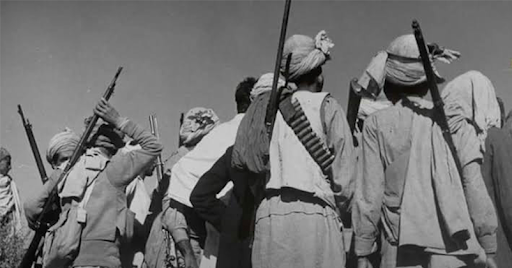
‘Operation Gulmarg’ was the codename for a plan formulated by the Pakistani government and its military to support the invasion of Jammu and Kashmir in 1947. It was part of Pakistan’s strategy to secure the accession of the princely state of Jammu and Kashmir to Pakistan. Operation Gulmarg involved providing logistical and military support to the raiders and army regulars who had invaded Jammu and Kashmir in late 1947. The plan included the deployment of Pakistani military personnel and equipment to assist these tribal forces. The goal of this operation was to capture and secure the region for Pakistan.
The invasion and Operation Gulmarg were key elements in the outbreak of the First Jammu and Kashmir War between India and Pakistan. This event ultimately led to the larger war over J&K which continued till late 1948. Operation Gulmarg was launched on the night of the 22nd of October, 1947. Over 2,000 invaders along with Pakistani army personnel first captured the bridge spanning the Kishanganga River on the Hazara Trunk Road linking Muzaffarabad and Abbottabad without a fight. The J&K troops guarding the bridge deserted their posts and joined the invaders. By morning, the first major J&K border town – Muzaffarabad, had been captured.
The horrors that then unfolded in Muzaffarabad were chronicled by the Pakistani journalist Zahid Choudhary in his 12 volume work – Political History of Pakistan. He wrote that for three days the invaders indulged in killing non-Muslims, looting, plundering and burning their houses. Innumerable Hindus and Sikhs perished as thousands of young women, girls and children were kidnapped and taken captive by Pakistani raiders. Writers have estimated that the number of Hindus and Sikhs massacred during these three days was around 4500-5000 while the number of kidnapped women was slated to be more than 1600.
The National Archives has numerous documents relating to the hapless victims of partition in the Mirpur-Muzzafarabad and Gilgit Baltistan areas. Both regions have been under illegal Pakistani occupation since the UN mandated ceasefire of the 1st of January 1949 took effect. The issue of the evacuation and release of Hindu and Sikh girls, women and children was in national headlines till 1950 but was soon relegated to the dusty files of the National Archives.