

Part I: Two districts fall
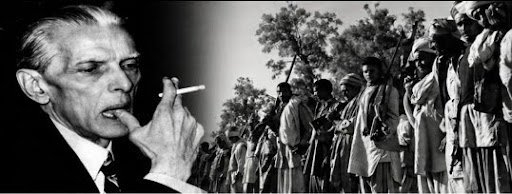
75 years ago, when it had been only two months since the partition of the country, the Maharaja of Jammu and Kashmir had concluded a standstill agreement with the newly created dominion of Pakistan. It was then that the tribesmen of NWFP of Pakistan, abetted and assisted by Pakistani army officers, launched a massive incursion into the valley and in the border areas of Jammu to the west. Pakistan tried to annex Kashmir by using the force of arms. Hard pressed by the incursion, the Maharaja acceded to the Indian Union and this paved the way for Indian troops to enter the state’s territories and counter the attack. On the night of the 31st of December 1948, a cease fire was declared and with that was born the Kashmir issue.
The story of the military operation in Jammu and Kashmir against the invading tribesmen has been told by many historians in India, Pakistan and in other countries. Each one has his/her own version. But the real story of the suffering, pain and disaster that this incursion brought upon the small Hindu and Sikh community of the valley has not been told so far. Instead, enormous amounts of misleading propaganda of so-called communal harmony in Jammu and Kashmir has been disseminated and hyped by the media for these nearly seven and a half decades. These accounts are a stupendous distortion of history, as they misrepresent facts and mislead unsuspecting readers and the new generations of Kashmiri Hindus and Muslims alike.
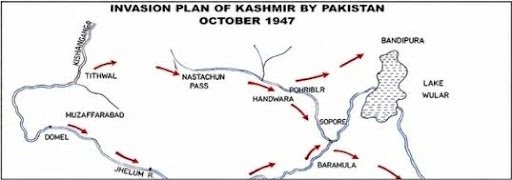
In this booklet, we intend to give some glimpses of the true history of the ‘tribal attack’ and what befell the Hindu and Sikh community in the course of the attack and the subsequent history of Kashmir. Early in the morning on 22 October 1947, the main column of the raiders crossed Garhi Habibullah and attacked Muzaffarabad. The traitors of the 4 Kashmir Infantry of the State force holding the outposts at Lohar Gali (Lohar Kot) and Ramkot, joined the raiders and gave them all the necessary information about the strength and disposition of the defending troops. Muzaffarabad was given over to fire and sword before its sleeping citizens could realize what had happened. In Muzaffarabad, a large number of Hindus and Sikhs were gunned down and females kidnapped, never to return to their families. Domel, a strategic locality on the confluence of Jhelum and Kishen Ganga fell on the 22nd of October. Defenders under the command of Brig. Rajendra Singh of the State forces dug in at Uri on 24 October, fought for the whole day and retreated to Mahura in the intervening night of 24/25 October displaying immense courage. Fighting against a numerically vastly superior enemy, and Brigadier Rajendra Singh having been martyred at Mahura, the remnants withdrew to Baramulla in the intervening night of 26-27 October.
The raiders pressed on. They entered the prosperous town of Baramulla on the evening of 26 October 1947. “The place was promptly given over to plunder and rapine. Hindus and Sikhs were hunted down and killed, their houses looted and then burnt. Young women were forcibly abducted and carried off to be sold like cattle in the streets of Rawalpindi and Peshawar, or to live and die as slaves in the mountain fastnesses of the distant tribal territory,”
The Defence Ministry’s report gives this graphic picture of the desolation of Baramulla town: “Terror stalked the streets of the quaint little town. The inhabitants, Hindus and Sikhs alike left all their earthly possessions and fled to the hills. The deserted streets lay silent, echoing only to the rattle of the raiders’ nailed boots as they threaded their way between the corpses strewn around. A thick pall of smoke hung over the ravaged town and flames from burning houses cast a lurid glare over burnt out shells of what had been prosperous shops and smiling homes. With many young girls and much treasure now in their possession, the raiders gloated over their good fortune.”
With the fall of Baramulla, the strategic entry point of the valley, the raiders under the command of Pakistani regular army officers, seized the campus of St. Joseph’s College and converted it into their operational headquarters. Here, on its spacious ground, they held the jirga in which the Pakistani military officers gave them a plan to attack Srinagar. Nobody knows the exact number of the tribesmen conducting this incursion. But after over-running the highlands between Baramulla and Muzaffarabad, the rapacious highlanders, known in Kashmir history as bombas and khashas, the treacherous looters and murderers, became their camp followers. Armed with firearms of the old sort, axes, swords, lathis and other crude weapons, carrying huge Islamic green flags and banners, wearing green arm bands, brandishing whatever weapon they carried, they raised slogans like ‘Islam zindabad’, ‘Pakistan zindabad’, etc.
The worst aspect of this was that the local residents of the town joined the tribesmen in large numbers and quickly developed Islamic fraternity, promising them any and all help that they needed. The locals volunteered to serve as their guides since the raiders were not conversant with the local topography. In Baramulla, the locals provided the raiders with a list of prominent Hindus and Sikhs, and then a group of two or three tribesmen accompanied by their local guides went to the residences of those prominent Hindus of the town. Members of their families were made to line the compound and one or two raiders followed the local looters and went inside the house, ransacked boxes, almirahs, cupboards, store rooms, kitchen and bedrooms. They were looking for cash and gold. They finished their job quickly and came out and that’s when the local looters, waiting in the compound of the house, swarmed inside and looted each and everything in the house. Before leaving the place in total desolation, the armed tribesmen shot dead the person from among the assembled group whose name had been given after looking up his name in the list that had been provided to them by the locals.
The murderers and looters ravaged street after street and house after house of the Hindu community. Within a few hours of the fall of Baramulla, destruction of the Hindus was brought about in gusto. A good number of males from the Hindu community were taken captive and brought to the camp at the campus of St. Joseph’s College while about a hundred young women and girls were locked up in the rooms of the old tehsil building of Baramulla. At night, raiders came with candle sticks in hands to select younger and more beautiful women to be picked up for rape and molestation. Reports said that many young girls and women smeared their face with soot and charcoal to look ugly and escape molestation.
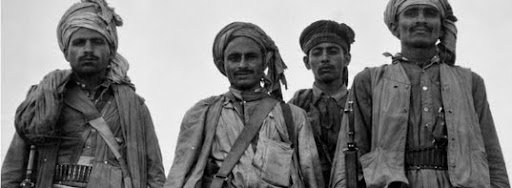
The treatment meted out to the Sikhs was even worse. In the terminology of the tribesmen, they were “bal wala kafar” meaning ‘the infidel with hair’. We shall come to that part later on. First, it’s necessary to briefly describe the personality of the tribesmen. They had long hair, trimmed near the lower part of the neck. With a longish shirt and baggy shalwar and a round Afghan cap, they invariably wore a waistcoat and a necklace of beads. Very few of them had military boots and most of them were poorly shod with a boot on one foot and a tattered chappal on the other. Sometimes, a few of them wore a straw sandal on one foot while the other foot remained bare. Hardy and tough as they were, they walked over ridges, hillocks and uplands with ease and with lightning quickness. Their pockets were stuffed with chana, gurh and dry fruits. Each of them slung a 303 rifle with a belt of bullets, and only a few carried pistols.
After the loot in Baramulla, their appetite for plundering the Hindus and Sikhs was fiercely whetted. Consequently, from Baramulla they fanned out in the length and breadth of the district Baramulla into scores of groups with two or three tribesmen and hundreds of locals including the bombas and khashyas and others carrying an assortment of crude weapons. They raised Islamic slogans ‘Allaho Akbar’ and ‘Islam zindabad’ and then in the name of Islam killed, looted and raped the minority community members.
The planning involved in expanding their incursion was so perfect that in just one or two days, they had traversed the entire district of Baramulla, visiting wherever there was a village with a few houses of Hindus and Sikhs. For example, 35 miles away from Baramulla, the district headquarter, there happened to be a lonely Hindu household in the deep recess of the Mawar river valley in Handwara tehsil. When this household was attacked, there were only two tribesmen with guns in their hands and more than three hundred locals who told the tribesmen that the Hindu household was a prosperous one. The saga of loot and the spoliation of this unfortunate house like hundreds of others beggars no description. In the small town of Handwara at a distance of about 20 miles from Baramulla, one Pandit family administered poison to all the members of the family to escape the atrocities of the tribesmen and their local supporters. When the Hindus in a village were attacked and looted, they were let out on the condition that they convert to Islam and the local mullah immediately undertook the ritual of converting them to this faith. The local mullah and others, most of them earlier so vociferous about “Sher Kashmir ka kya irshad, Hindu Muslim Sikh ittehad”, wasted no time in convincing the newly converted about the grace and benefactions which the new faith would bring them. The mullah, in consultation with the neighbours of the converted Pandit or Sikh, gave them Islamic names, regulated their attendance in the mosque and began giving lessons in the tenets of Islam. They were told, in emphatic words, that the incursion of the mujahids, meaning the tribesmen, was meant to eradicate all traces of “kufr” (infidelity) from Kashmir. The converted Pandits and Sikhs were quick to endorse the decree.
The Defence Ministry’s publication cited above observes: “Yet in their (tribesmen) success lay the seeds of their doom. For in the savage excitement of looting and raping, the ultimate goal of the “Holy War” was forgotten. Each man tried to grab as much wealth or as many girls as he could, and for the moment refused to be bothered with the “infidel” Maharaja at Srinagar or the “liberation of the oppressed Muslims” of Kashmir. Many of the raiders, loaded with loot, turned back for home and responded to their officers’ expostulations by saying that they would be back soon after depositing their treasure in security. The advance on Srinagar was thus held up for a few days, and those proved crucial.”
As the raiders headed along the JV Road to Srinagar, they also fanned to the right and left of the road. Supported and guided by the locals, they reached each and every village in district Baramulla, wherever there was Hindu or Sikh habitation, even if in the smallest number, with the sole purpose of looting them and carrying away whatever booty they could lay their hands upon. Each attack on the local Hindu household was followed by a general loot of the house, leaving the inmates with nothing but the scanty clothes they wore on their person. Smaller and larger towns fell one after another as there was not even a policeman let alone armed troops. The raiders, looters, religious propagandists, mullahs and the yelling crowds had seemingly been given a free rein. People assembled on the streets, raptly listening to the harangues of rabid Islamists telling them that the Pakistani flag had been hoisted atop Hari Parbat and that the rule of Islam had been promulgated.
As Muzaffarabad, Domel, Chakothi, Uri and Bonyar fell one after another, refugees running to save their lives made a beeline across the JV road and headed towards Srinagar. Some tonga carts and bullock carts carried the beleaguered refugees-Hindu and Sikh men, women and children. Some rode bicycles and others just walked in groups saying not a word but hurrying onward to the city at whatever speed they could muster. Hindu and Sikh families residing in houses closer to the JV Road left their homes and withdrew to the hinterland to be with a relative or a friend in the hope that the raiders would not turn to them but would march on to Srinagar. That did not work out. The raiders were informed by the locals that Hindus and Sikhs were hiding in their villages and in this way, any hope of their survival receded. From remote villages, some Hindu families moved to the smaller towns, from smaller towns to larger ones like Sopore, Barmulla, Handwara, Kupwara, Bandipora, Sumbal, Patan, etc. But no town, no village and no hamlet was spared. Selective killings of Hindus took place to strike fear in the entire community.
Treatment meted out by the locals towards the beleaguered Pandits and Sikhs was deplorable, although there could be an exception here or there. By and large, the locals refused shelter to them and their supplication was of little avail. Even after declaring that they had embraced the Islamic faith and chanted the Kalima, they were not spared. One or the other Quranic verse was cited to justify the cold and unsympathetic treatment given to the Hindus. In many cases, the Hindus were killed by persons known to them, in order to grab their booty in cash and kind. Nevertheless, there were Muslims in some villages who remained passive and did not provoke others against the Pandits.
While attacking Hindu houses and subjecting these to loot and arson, the raiders seeking gold, silver or costly fabrics broke the metallic grips of somavars and copper hooks taking these for gold. But the local looters spared not a blade of grass. Even pestles and anvils and grinders made of stone were looted from Hindu houses. Later on, it was found that the peasants used to winnow grain on carpets stolen from Hindu houses. Books stolen from Hindu houses were torn into thousands of shreds and strewn all over the compound. Green flags with Pakistani insignia were hoisted atop Hindu houses and temples. The Hindus were asked to wear green patches or armbands as a mark of distinction of a kafir, meaning heretic from a Musulman’s perspective.
Hindus hid the pictures of gods and goddesses which they are wont to keep in their puja rooms. Idols of deities worshipped every morning were kept hidden from the sight of the tribal raiders. In a large number of cases, the raiders ordered the local crowds to dig the rooms on the ground floors of Hindu houses because they were told by the locals that the Hindus had buried their gold and money and precious articles deep underground.
The raiders moved in private lorries and trucks that they had brought with them from their places of origin. But from where they got the petrol for these vehicles was not known. Later on, after the recapture of Baramulla, it was found that all the supplies for the raiders – clothing, food grain, packed eatables, fruits, petrol etc. were supplied from Pakistan in special trucks. When the raiders were repulsed by the advancing Indian Sikh LI, they told locals “looto looto looto” meaning loot the stores which the fleeing raiders had to leave behind as Indian troops closed in. They did not want the stuff to fall in the hands of the Indians. No succour whatsoever came to the traumatized Hindu minority as there was no government and lawlessness had overtaken the land.
Baramulla was a large district in those days extending from Uri to Narbal in length and Gulmarg to Guraiz in width. Kupwara and Tithwal also fell within its jurisdiction. The entire district had fallen in the hands of the raiders. Local goons, who till the other day, led crowds to the rallies of the National Conference, carrying high the red flag with the plough emblem of the NC and yelling the NC cliché of “Sheri Kashmir ka kya irshad/Hindu, Muslim Sikh ettehad” replaced this with green flags and pro-Islamic and pro-Pakistan religious slogans. Sher-i-Kashmir’s precept of communal harmony evaporated in thin air and the minority community lay flat and prostrated in front of the terrifying Islamist fanatics. How fickle-minded was a Kashmiri?
Part II: Incursion in the Jammu region
Early in October 1947, raids by Muslim ex-servicemen from present POK, armed with modern arms and equipment, had been carried out on the State forces garrisons deployed on the western borders of the state. The size of these raids had varied from small parties of approximately ten to a hundred. The objective of these raids had been to pin down the garrisons of the State army and also to serve as a feint for the main push along the Kohala-Srinagar road. The raids had well served their purpose, for they had led to a large-scale rising of the turbulent Muslims on the Poonch and Mirpur borders, who were supplied with armed ammunition by the raiding forces. By 15 October, the raiders had penetrated into Poonch and Mirpur, surrounding some of the State Force garrisons and destroying others. The Muslim components of the Jammu and Kashmir forces in the Poonch-Mirpur sector had deserted on 18 October with arms and ammunition and joined the raiders. A few days later, the hostiles had made their main push along the Kohala – Srinagar road. When the main push had been in progress, all garrisons in Poonch and Mirpur had been encircled.
The weak and isolated garrisons carried on a heroic, though unequal, struggle against heavy odds. Three weak brigades were deployed in the Poonch, Mirpur and Jammu sectors. Bhimber had fallen at 0400 hours on 28 October. The ring around Mirpur was tightening and Kotli was heavily besieged. Military Advisor, J&K appealed to the GoI on 28 October for air support. Nothing happened. On November 2, Prime Minister Mehar Chand Mahajan made a fervent appeal to Nehru to save the state garrisons and the thousands of refugees from being massacred. Nehru’s priority, however, was Srinagar and the valley. General Bucher, officiating C-in-C of the Indian Army was not prepared to relieve the Poonch and Mirpur garrisons at the cost of the Valley. However, some air action did ensue from November 3. Mendhar fell on 7 November and the threat to Poonch town increased. Notwithstanding sporadic air strafing, the situation worsened.
Rajauri massacre
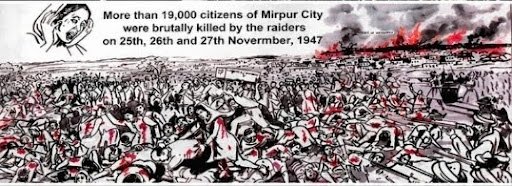
After the fall of Mendhar, Rajouri was captured by the enemy. The number of Hindus and Sikhs killed, wounded and abducted was reported to be 30,000. The massacre of Hindus in Rajouri took place on Diwali. Ever since, the Hindu inhabitants of Rajouri have not been celebrating the Diwali festival in memory of their people, butchered in cold blood by the raiders. About fifteen hundred refugees at Chingas were also reported to have been slaughtered. Jhangar was besieged and Nowshehra was threatened. The State troops evacuated Rawlakot and arrived at Poonch with 6,000 refugees. The tiny garrison at Beri Pattan was attacked and the bridge damaged. Garrisons at Mirpur and Kotli were under tremendous pressure. On 12 November, State Prime Minister Mehar Chand Mahajan made a moving appeal to the Defence Minister of India to come to the rescue of the beleaguered people of the western region of Jammu province. Another day had to pass till Uri was recaptured on November 13, 1947 by the Indian troops. Only then did New Delhi turn to the situation in the Poonch-Rajouri sector. But Mirpur was lost by then.
With the fall of Mirpur, Bagh, Kotli and Muzaffarabd (which was the first to fall), thousands of Hindu and Sikh refugees from the entire region had to flee their homes, carrying with them barely a few clothes to cover their body and nothing else. The towns and localities which fell in the hands of the raiders were cleansed of Hindus and Sikhs with thousands massacred or wounded and thousands more landed in Jammu as refugees. It is impossible to compute the number of Hindu and Sikh women abducted and taken away by the raiders. Unconfirmed reports emerged that most of them were converted and forcibly married to Muslims. There are, however, confirmed reports that many Hindu and Sikh girls jumped down from Kohala Bridge in the gushing waters of the Jhelum and perished while saving their modesty. Reports state that many Hindu and Sikh women were abducted, forcibly converted and kept as slaves. Most of the Hindu and Sikh refugees who could save their lives and arrive in Jammu were put up in refugee camps. The story of the siege of Poonch is one of the great sagas of military heroism and gallantry with hardly a parallel in the military history of the world. The story of how Brigadier Pritam Singh saved Poonch town from falling into the hands of the enemy must be written in letters of gold. Even today, sixty-five years after the event, people in Poonch city have kept the picture of Brigadier Pritam Singh in their homes.
The Hindu and Sikh refugees from the Pakistan occupied parts of Jammu and Kashmir have been doubly unfortunate. The State government did not recognize them as citizens of the state and argued that they were migrants from other parts of Punjab who came to Jammu. Here, it is pertinent to note that many Hindus and Sikhs who fled their homes in Muzaffarabad, Domel, Chinari, Chakothi right up to Uri had done so and come to Srinagar in search of shelter. But Sheikh Abdullah, the then Chief Administrator of the State, pushed them out of the valley and forced them to go to Jammu, fearing that their stay in Srinagar could flare up communal passions. Moreover, he did not want the Muslim majority complexion of the valley population to change. Most of these refugees have been denied state subject-hood till date. Fortunately, they somehow figured in PM Manmohan Singh’s 2008 package for the relief and rehabilitation of the refugees in J&K.
Part III: Kashmir Front again
(Section A)
The position on the evening of 29 October was still grave. So far, 1 Commissioned officer and 11 ORs had been killed and many more wounded while resisting the raiders at Baramulla. Lt. Col. D. R. Rai, holding back the raiders 5 kilometers east of Baramulla signaled to Delhi. 500 enemy and 2000 locals near Baramulla cannot be held by State forces, so will undertake task. Baramulla had fallen and refugees in thousands were seen moving towards Srinagar city. Lt. Col Rai was hit by a fatal bullet. Thus fell a gallant son of India in defence of freedom and of the weak. Lt. Col. D.R. Rai was given posthumously the award of MVC. Ona small hillock by the roadside about four or five kilometers from Baramulla main town towards east, stands a grey stone placed there to commemorate martyrdom of this valiant soldier of the motherland.
On November 3, the historic battle of Budgam was fought when the raiders numbering anything upwards 700 tried to sneak in and control Srinagar airport. The Kumaon regiment fought gallantly, suffered many casualties but repulsed the enemy attack inflicting heavy casualties on it to the tune of several hundred killed and as many wounded. Another gallant son of the motherland, Major Somnath Sharma, commanding Kumaon force sent this historic last message to the headquarter before laying down his life fighting the enemy with bayonets, “The enemy are only 50 yards from us. We are heavily outnumbered. We are under devastating fire. I shall not withdraw an inch but will fight to the last man and the last round.”
Next day, November 4, 1947, Deputy Prime Minister Sardar Patel and Defence Minister Sardar Baldev Singh flew down to Srinagar to observe things on spot and to study the situation. They returned to Delhi same evening and apparently impressed on the Cabinet the need for further urgent reinforcement in Srinagar.
Brigadier Sen wanted the raiders to congregate at one place, lured them to Shalateng in the outskirts of Srinagar, and in the battle of Shalateng fought on November 7, 1947 a decisive and crushing defeat was inflicted on the enemy. Brigadier Sen’s strategy of encircling them on three sides worked wonders. “The RIAF strafed them from the air. Kumaon troops fired with their bayonets flashing. Totally astounded, the raiders ran here and there, and hundreds fell to the concentrated fire. Within twenty minutes the battle of Shalateng was over, and the enemy started fleeing desperately along the road to Baramulla, leaving behind their lorries ammunition and supplies. The raiders fled in panic leaving 500 of their dead on the ground.” This battle denied Pakistan Ke for ever.. Around 13.30 hours on 8 November, the town midway between Srinagar and Baramulla was recaptured. By 1600 on November 8, 1947 Brigadier L.P. Sen and his I Sikh LI and I Km entered Baramulla triumphantly. The raiders had fled the town leaving behind huge supplies and stores which the fleeing tribesmen had exhorted the local Muslims to loot and not allow it to fall in the hands of advancing Indian troops. By the evening of 13 November Uri was recaptured and the threat to the alley receded.
It is interesting to recount the swift changing mood of Kashmiri Muslims in the wake of recapture of the valley. The Islamic spirit of domination and aggression which had become dangerously vibrant and was reflected pervasively in its harshest form from October 26 to November 8, (14 days) in the past against the weak and infinitely small Hindu and Sikh population of the valley, changed quickly to that of remorse and fraternity once the gun wielding tribal invaders were humbled. As the news of recapture of Baramulla spread across the district, villagers who had forced conversion on Hindus beseeched that they return to their original faith and resume their normal cultural life forgetting what had befallen them only recently. But no villager was prepared to return an iota of their looted property.
The Muslims spoke conciliatory words to the Hindus, attributing the catastrophe to the intervention of divine powers. At some places, Muslim neighbours indeed were very generous, and offered something by way of small succor to their traumatized Hindu neighbours.
When the fighting situation in the valley eased a little and normal activity was resumed, the government of the state now led by the Chief Administrator (that was his designation then), Sheikh Muhammad Abdullah tried to put together the nuts and bolts of civil administration. The primary issue was that of thousands of refugees, the entire Hindu and Sikh community of district Baramulla of those days and the flocks of refugees who had sought shelter after fleeing Muzaffrabad. They were shelterless and destitute of everything in life. Liaison Committees were constituted whose members visited Baramulla and other towns exhorting people to maintain communal harmony. The Muslims responded with as much fervour as they had responded to the raiders. The Sheikh administration ordered that the looted property be returned to the Hindus and Sikhs and mohalla committees were formed to supervise and take into its custody the recovered property and then hand it over to the Hindus who identified their belongings to take these back home. Yes, huge dumps of looted property were raised close to the houses of the Hindus at an open place in the mohalla. But what were its contents? Empty cardboard boxes, broken and shattered crockery, dented tin boxes, tattered bed sheets, broken and disfigured items of kitchenware, shoes without soles, containers without lids, earthen pots and mud ovens, broken kangris etc. And the members of the committee supervising recovery of looted property asked the Hindus to give a written and duly signed statement that they received all their looted goods intact and in original condition.
National Conference had assumed power and the Sheikh was the undisputed leader. With the ouster of the raiders from Uri after a fierce fighting, civil administration in Kashmir under Sheikh Abdullah came into motion. During the raid he had sent his family to Indore to remain safe. But tasting absolute power and supported by Nehru the Sheikh lost no time in adopting arbitrary and dictatorial attitude. He and his party began a massive propaganda that NC had saved Srinagar and the minority community during the days of attack. Nothing was far from truth Am such was the blitzkrieg of propaganda that Indian civil society in Congress leadership and Nehru began to believe in what was the truth. Autocratic and arbitrary acts of the Sheikh after assuming will be found in detail from the official letters written by Maharaja H. Singh to Sardar Patel, then Home Minister of India. Looted, vandalized and traumatized Hindus and Sikhs were left to their fate and they fended for themselves in misery and destination. They laughed when the slogan of communal harmony was brandished before them. It was the biggest joke of the century. And even today, the remnants of this lie persist. But of course there were stray cases in which local Muslims did show empathy with the victimized minority community.
(Section B)
Though Uri had been recaptured by the Indian troops and some advance was also made in Poonch-Rajouri sector, yet from February to May 1948, the raiders tried to re-enter the valley from Tithwal region. They had reached as far as Handwara town which fell quickly and where from they would launch an attack on Sopor and if successful, they would cut off the Srinagar – Uri vital link of the JV Road. This supplementary incursion of the tribesmen forced the vast Hindu population of the area in Handwara, Wadipra, Magam, Kupwara, Trehgam, Sholur and Sonamul etc. to abandon their homes and run for shelter to Sopor. This is called the second migration of the Hindu population of district Baramulla. The plight of the Hindus in this migration was no less pathetic and miserable. Once they left their homes, the local Kashmiris swarmed like locusts and looted them to the last straw. Many lonely Hindu houses were set on fire. Their granaries were looted and household goods stolen.
There was no succour from the government and they had to fend for themselves wherever they could hide their head, in Sopor or Baramulla of Srinagar It was only after Indian troops captured Kupwara and Tithwal and Shulur that the displaced persons could return to their villages. All that the state government was doing with alacrity was that of giving hype to false communal harmony in the valley. Not a single person who had indulged in loot, arson, burglary or worked as guide to the raiders was touched. No punitive action was taken against anybody. They were projected as saints and previously oppressed during Maharaja’s regime.
The real rulers of Jammu Kashmir now were the NC leaders and their supporters who had created a parallel administrative institution of sorts. Ghulam Qadir Masala of Sopore, a senior NC leader, behaved like the Governor of the District of Baramulla dictating orders to the DC, Shri Rughnath Mattoo. The government’s entire attention was focused on the local Muslim population now projected as oppressed and suppressed in the course of the tribal attack. Nobody talked about the Hindu and Sikh minority that had suffered the worst type of tyranny, oppression and loot. In a state of great misery and destitution, the Hindus of Baramulla district eked out a miserable living.
Then around the 18th of November, Nehru paid a visit to Baramulla. NC gathered together a crowd of people to be addressed by Nehru. Instead of assuaging the feelings of the Hindus and Sikhs, he eulogized the Sheikh with all the force of oratory at his command. He was not even prepared to listen to some young men from the Hindu community present in the crowd he addressed and they were made to sit down like suppliant doves. Had the great misfortune for the Pandits come to an end or had it just begun?
Having recapitulated the 75-year old saga, the question before the Kashmiri Hindus is “Where do we go from here?” Their ethnic cleansing in Kashmir took place in 1990. 3.5 lakh Hindus have been thrown out of the Valley. The Valley has been Islamized to the hilt. Hindu properties have been subjected to vandalism, or encroachment or even occupation. Under distress, Hindus have sold most of their left-over properties and thus have lost even a foothold in Kashmir. They are now dispersed all over India and abroad. The central government’s Kashmir policy is Muslim centric and not centred on nationalism or secularism. The policy of appeasement has immensely helped in the Islamization of Kashmir and it is not an exaggeration to say that J&K is a theocratic polity within a secular Indian Union. The Indian government has refused to accept the genuine nomenclature of Internally Displaced Persons for the exiled Hindus of this region. The Chief Minister of the State says that the State has acceded and not integrated into the Indian Union. Day in and day out he demands a political solution for J&K. Separatist leader Ali Shah Geelani openly and repeatedly in public rallies, in mosques and in other congregations, demands cessation from India and accession to Pakistan. The India government cannot touch him, leave alone prosecute him for treason. Under these circumstances, the beleaguered Kashmiri Hindu is forced to abandon, albeit unwillingly, his claim and his right on his motherland Kashmir. Kashmiri Hindus managed to survive the severest onslaughts of fanatical and rabid Shahmiris, Sayyids, Chaks and Pathans, but they were decimated under the “secular-democratic” arrangement of free and independent India.