An overview of its emergence and the formation of its organisational structure
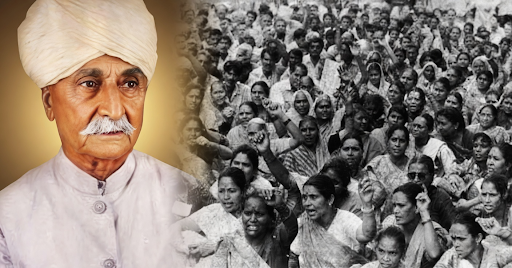


An overview of its emergence and the formation of its organisational structure
1.The emergence of the Praja Parishad
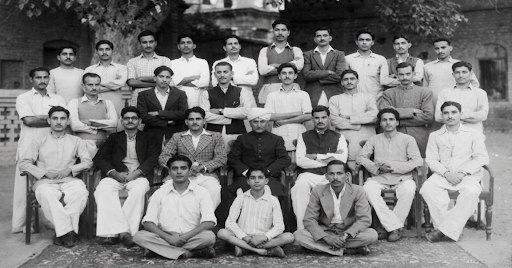
(a) Birth of the organisation.
Prior to the accession of the state of J&K to the Indian Union in 1947, there was no major political party in Jammu unlike in the valley of Kashmir.
There were outfits like Naw Jawan Sabha, Muslim Conference, Hindu Sabha, Dogra Sadar Sabha and some others but their activities were largely confined to certain sections of the various communities. Caste based Sabhas of numerous Biradaries also existed alongside these bodies. Despite this, the RSS had developed a strong unit in the region.
On the contrary, the Muslim conference had built up a strong movement against the Maharaja, in Kashmir (Jammu and Kashmir) since 1931. In 1938, a major faction of it led by Sheikh Mohammad Abdullah divided the MC and renamed itself as the J&K National Conference to attain the support of Shri. Jawaharlal Nehru and a few others from the Congress who were against the Maharaja of the State. The National Conference could not create its mass base in the Jammu areas due to its outlook and anti Dogra slogans depicting the Maharaja as the whole Dogra community despite it being a dynastic rule.
After the painful communal division of India as per the design of the imperialists, created the theocratic State of Pakistan, its leadership not only staked claim on J&K because of it being Muslim majority but also launched a massive invasion with tribals supported by the Pak army which was, at the time, being controlled and commanded by British Generals.
The Maharaja of the state, Hari Singh using his legal authority signed the Instrument of Accession with the Indian union on October 26, 1947, and thus opted for secular India braving pulls and pressures rather than yielding to theocratic Pakistan.
Under compelling circumstances, the Maharaja handed over the reins of power to the political friend of Shri Nehru in Jammu and Kashmir, Sheikh Mohammad Abdullah, who pledged his loyalty to the Maharaja as the National Conference party had little in the form of a base in Jammu and other regions of the State. Seasoned servants and opportunists thronged to the National Conference to show their loyalties to the new ruler and indulged in numerous acts of sycophancy and even those of different kinds of degradation.
These people began chanting the slogan viz. Aek Rehnama, Sheikh Mohd. Abdullah, Aek Tanzeem National Conference. Aek Jhanda, Halwala.
Thus, an intriguing situation was created. Sensing these trends of ‘unilateralism’, the visionary Pt. Prem Nath Dogra and his colleagues felt that in a democracy, such a form could prove despotic particularly in a State like of J&K. Pandit Prem Nath Dogra and his admirers after due deliberation for three days, decided to float a new party under the name – The Praja Parishad. A young team of its activists was announced with Shri. Hari Wazir as its first President and Shri Hans Raj Pangotra as General Secretary. Other office bearers of this new party also included Shri. Sham Lal Sharma, Shri Durga Dass Verma, Shri Rajinder Singh, Shri Sahdev Singh, Shri Om Parkash Sangra, Shri. Roop Lal Rohmetra, Jagdish Raj Sahni, Mulkh Raj Arora, Hans Raj Ramnagar, Shri. Makhan Lal Aima, Jagdish Raj Khader Bhandar, Ishwar Dutt Shastri Magloor, Natha Singh, Dwarka Nath and others. Along with Pt. Ji, Shri Bhagwat Swaroop was named as Marg Darshak.
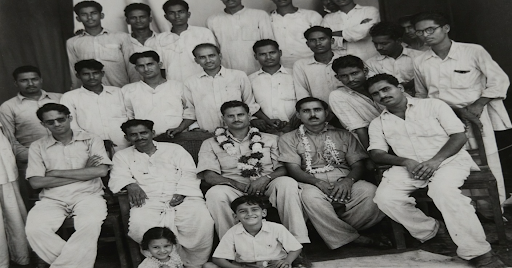
(b) The role of the RSS in J&K
Prior to the birth of the Praja Parishad, the Rashtriya Swayamsevak Sangh had established well-knit units (Shakhas) in most parts of the State, especially in the region of Jammu.
In the late thirties (1939), while preparing to play an important role in the movement for securing the independence of India from the foreign yoke, the undivided Punjab, adjoining J&K, like many other parts of the country had witnessed the RSS become a hub for patriotic activities. Shri Madhav Rao Muley was the Prant Prachark, who dispatched a few dedicated activists to establish RSS Shakhas in the State. The first to arrive was Prof. Balraj Madhok in the late thirties. But he got a job as a Professor in a Srinagar college, therefore, Shri Jagdish Abrol of Sialkot, Shri Kedar Nath Sahani and some other Parcharks instead put in great efforts to establish RSS Shakhas at various places. The first one was established at Dewan Mandir in Jammu city. Many local youths came forward to disseminate RSS activities (primarily the games). These youths included Shri. Shayam Lal Sharma, Shri. Durga Dass Verma, Dr. Om Parkash Mengi & some others.
Shri. Abrol established his first karyalya at Ved Mandir in a small room. Though a large number of youth joined the RSS network, it was generally known as a body of children/teenagers. In the early forties, Shri. Muley and some senior RSS men approached Pt. Prem Nath Dogra in a bid to request him to lead the RSS in the State as Sangh Chalak to which he agreed and a big function was held in Jammu for the same. Some high up of the RSS also Joined this samaroh. With this taking over by Pt. ji as Sanghchalak, the body attained significant respectability and a fillip to its working.
(a) Divided opinion
When in 1947, it was decided to float a political body, some senior activists were of the opinion that the new party should be named as Jammu Praja Parishad and its manifesto be titled as Naya Jammu. This would be an answer to the Kashmir National Conference and also to Naya Kashmir. But some others were of the view that the party should not be perceived as confined to just one region alone and should also not sound reactionary.
Due to differences over the name, some top leaders of the RSS advised that the new party should be named the All Jammu & Kashmir Praja Parishad because the legal authority, the Maharaja, had signed the Instrument of Accession for his entire State. More so it should not subscribe to the philosophy of any communal decision as Pakistan had come to be a theocratic State. Hence, the new party was named as the All Jammu and Kashmir Praja Parishad with the Tri-colour as its flag, with the following objectives:
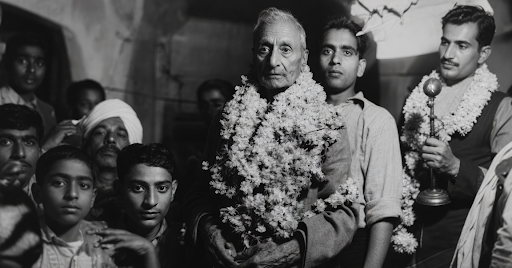
(b) Objectives of the party.
The main objectives of the party were “to achieve full integration of Jammu & Kashmir State with the rest of India like other acceding states and to safeguard the legitimate democratic rights of the people of Jammu from anti-Dogra govt. of Sheikh Mohammad Abdullah.”
The Praja Parishad held that Jammu and Kashmir is an inseparable and indivisible part of India. Based on Indian culture, the party would establish such a political, social, and economic order in which there would be no discrimination on account of caste, colour and faith. All citizens would be provided equal opportunities for progress.
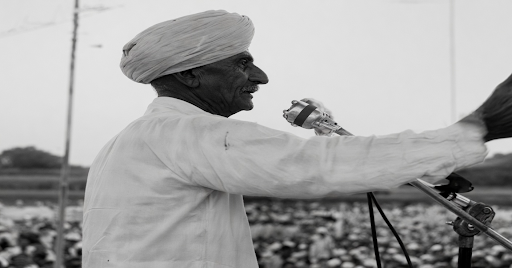
(c) Constitution of the Praja Parishad
Any resident of Jammu and Kashmir of age 18 years and above who endorsed the aims and objectives of the party could become its member. He/She continued to be its member as long as he/she regularly paid its annual membership fee which was four Annas unless he/she resigned, was removed from the membership or secured the membership of any other political party.
(d) Primary Samiti (Committee) :
The fundamental structure in the party organisations was the primary committee. Wherever there were twenty five or more members of the party, a primary committee was to be constituted. The primary committee consisted of a president, a secretary and a treasurer. All of the three were to be elected by the members.
(e) Mandal Committee :
The immediate next higher organisational structure was the Mandal Samiti. For every sixteen groups of primary committees there would be a Mandal committee. All the members of the primary committee were to elect the president of the Mandal who would constitute the executive consisting of a secretary, a treasurer and six members. The Mandal committee would be responsible for the execution of the policies and programmes of the party, under its jurisdiction.
(f) Tehsil Committee :
The structure above this would be the Tehsil Committee. All the members of the executive of the Mandals in a Tehsil would jointly constitute a Tehsil committee. They would elect a President, at least two vice – Presidents, a treasurer and nine members of the executive of the Tehsil Samiti. They, with the consent of the President of Tehsil committee, would also elect two representatives for the general council as well as the organisational secretary. The organisational secretary in co-operation with the secretary of Tehsil committee would be responsible for the functioning as well as popularising the ideology of the party in that Tehsil.
(g) General Council :
The constitution of the general council is as follows :
(a) The Presidents, secretaries and organisational secretaries of all the Tehsil Samitis as well as the elected representatives from each party constituency.
(b) The Presidents, secretaries and organisational secretaries of all the District Samities.
(c) Those institutions, combined with the Praja Parishad, whose five members would be elected by the President on the order of those institutions.
(d) It would be the right of the President of Jammu and Kashmir Praja Parishad to nominate five members of Praja Parishad.
Each member of the General council would have to pay 5 Rupees annually. It would be the main committee which would run the policies and carry out the functions of the Praja Parishad. During its tenure, it would have a right to solve all the problems which would come in its way. It would be allowed to issue orders to other committees from time to time. The session of the General Council was to be held once a year.
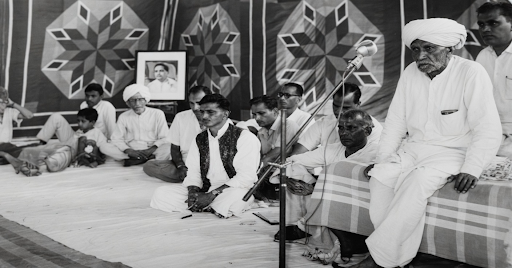
(h) Central Samiti :
At the apex of the party hierarchy, there would be a Central Samiti comprising 21 members including the President. These members would be nominated by the President from the members of the General council. The President of the central committee would also nominate two vice presidents, one secretary and one treasurer. The central committee would be responsible to the General Council for its actions and orders regarding the questions which were not defined in the party constitution. It worked to fulfil the aims of Praja Parishad.
(i) President of the party :
The President was at the apex of the party’s organisational structure. The President would have the highest authority. The General Secretary of the party would invite nominations from the candidates desirous to contest for Presidentship from the Tehsil and District working committees of the party. The nominations were to be submitted within a fixed time period. After receiving the nominations, any candidate who desired to withdraw could do so. On the pre-determined date, the General Secretary would announce the names of the persons who would finally remain in the fray. He would then issue ballot papers to each member of the General council to vote in favour of their preferred nominated candidate. After receiving the ballot papers duly filled, the General Secretary would open them in the presence of all members of the General body at an appointed date. The candidate with a majority of the votes would be declared as the President of the party.
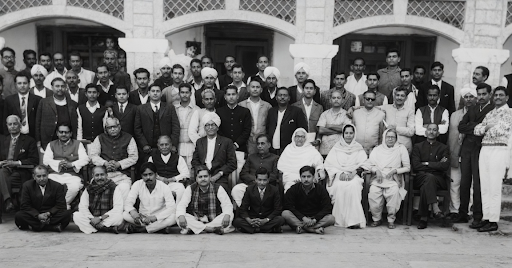
(j) Party Finance :
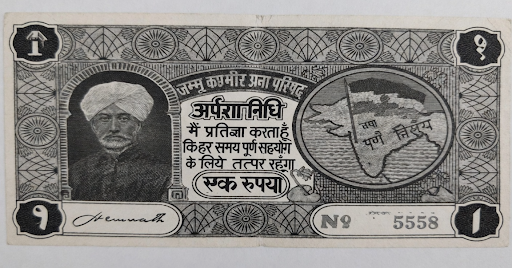
The finances of the party consisted of the money collected in the form of the membership fee of four Annas as well as the five rupees collected from each member of the General Council. As this amount was insufficient to meet the day to day expenses of the party, donations from different individuals were also accepted. In order to finance the different movements launched by the party from time to time, the party got printed tickets of Rs.1, Rs.5, Rs.10, Rs. 20, Rs.50, Rs.100 with the photograph of its president Pt. Prem Nath Dogra and sold them amongst the people. Rumours circulated that the then Maharaja of Jammu and Kashmir was also contributing to the party funds. The press tried to confirm this fact from the top party leaders who were alive then. However, most of these leaders denied such charges.
This irked the Sheikh very much as he was already intolerant towards his adversaries. Several important activists of the RSS and other small organisations were expelled from the State. They included Prof. Balraj Madhok, Shri Jagdish Abrol, Shri Kidar Nath Sahni, Kavi Raj, Vishnu Gupat and others.
Pt. Prem Nath Dogra and some of his colleagues were arrested and detained. Pt. ji was shifted to Srinagar in intensely cold conditions during the month of Feb.1949. He was put under detention by invoking section 3 of the RPC which was notoriously known as “Daffa Tun” which meant to put in lockup without any trial.
He was dubbed as anti-Muslim in 1947, but ironically in 1932, when Pt. Dogra had been prematurely retired from the service, he had been charged with being mild towards Muslim Conference agitators as the Wazir Wazarat (DC) at the Muzafarabad District of the State. The arrest and detention of Pt. ji by the Sheikh Govt. resulted in great resentment, as this Govt was indulging in many other acts of omission and commission.
In May, 1949, the Praja Parishad launched a Satyagraha movement to seek the release of Pt. ji. In order to crush this movement, the Sheikh led dispensation resorted to many kinds of atrocities. This led to a wave of anger against the National Conference and its supporters within and outside the state. After the intervention of certain national leaders from New Delhi, Pt. Dogra was released from Srinagar jail on the 8th of October, 1949. However, this eight month long jail term had adverse effects on his health. In this movement, several Satyagrahis were tortured to the extent that they were rendered hard of hearing and faced other maladies throughout the rest of their lives. These satyagrahis also included Shri. Dina Nath of Jammu and Shri Chuni Lal Pandoh of Reasi. But all of this provided a huge impetus to the Praja Parishad and its role became all the more important when the Sheikh govt. took some improper decisions under communal and parochial considerations.
After his release from jail, the Praja Parishad announced Pt. Prem Nath Dogra as its President. Shri Durga Dass Verma was appointed its General Secretary. Dhanvantar Singh, Zaildar Ranjit Singh of Nagri Parol, Luder Manni of Sangra Koota and Shri. Sham Lal Sharma had carried out duties as Vice Presidents. Shri. Bhagwat Swaroop was Sec. (Org.) and Gopal Dass Sachar was put in charge of publicity matters. Makhan Lal Aima was appointed Prabhari (outside the State). Ram Nath Balgotra was placed incharge of Kathua District. Radha Krishan Sharma was given the responsibility of Udhampur District and Roop Lal Rhometra was assigned Doda District. The members of the working Committee announced included – Chatru Ram Dogra, Shiv Ram Gupta, Sant Ram Baru, Gian Chand Mirpuri, Jagat Ram Aryan, Luder Mani Sangra, Zaildar Ranjeet Raghunath Singh Samyal and Jagdish Khader Bhandari.
The following individuals were appointed as Organisational Secretaries:
Shri. Natha Singh (Ramban), Shiv Kumar Sharma (Kishtwar), Baldev Raj (Bhaderwah), Mulkh Raj Arora (Udhampur), Rishi Kumar Koushal (Reasi), Hans Raj Gupta (Ramanagar), Rajinder Singh & Shadi Lal Sharma (Jammu), Som Nath Dogra (Akhnoor), Thakur Seh Dev Singh (Nowshera), Jagdish Chander Shastri(Rajouri), Narsingh Dass Sharma (Samba), Dawarka Nath (Basholi), Ishwar Dass Shastri(Hiranagar), Swaran Dev Singh (Billawar), Jagdish Singh (Kathua), Ved Parkash & Yash Bhasin (R.S.Pura)
Post Pt. Dogra’s release:
After his release from an 8 month long detention in Srinagar jail, Pt. Prem Nath Dogra lost no time and took stock of the fast moving developments within the State as also at the national and international levels vis `a vis Jammu and Kashmir. After due consultations with local activists and leaders with a patriotic outlook at the national level, it was decided to build a strong network of the Praja Parishad right up to the village level.
The dedicated workers did a yeoman’s job in establishing party units at various levels. After accomplishing the task of organising the PP units at variegated levels, there was unanimity in the opinion that Pt. ji should himself head the Party.
November 10, 1951
A State level convention was held on this date. In his first ever Presidential address, Pt. Dogra listed a detailed account of the happenings and of the dangers looming large ahead. Pt. Dogra made his maiden address as President of the Praja Parishad at this massive convention held in Jammu.
In his forty minute speech, Pt. ji pointed out to the delegates that this session of the representation of the people was being held at a crucial juncture when Pakistan was out to grab the entire State of J&K with the strength and support of the Anglo-American bloc, while the Sheikh led National Conference Govt. played dubious games. Apparently, he said, the division of the State was being opposed but little was being done to liberate the enemy held areas although lakhs of people of these places had been forced out to become refugees. Moreover, the region was being designed to have a constitution which would be along the lines of the party bible of ‘Naya Kashmir’ and in accordance with their slogan ‘Quit Kashmir’.`
Referring to the grave situation created by the massive enemy invasion of the State, Pt. Ji, in his address, paid rich tributes to the great martyr Brigadier Rajinder Singh, the Chief of Staff of the State Units. He recalled how with just about a company of the State Army, he had checked the advances of thousands of invaders for three days, as they attempted to enter the Valley of Kashmir. He had fought the enemy till the last bullet and the last drop of his blood in consonance with the order of the Maharaja. This had provided an opportunity to Maharaja Hari Singh to sign the Instrument of Accession with the Indian Union on October 26, 1947, with the Indian troops landing at Srinagar the very next day on October 27 to push back the invaders.
Pt. Dogra, in his address, also mentioned the great valour demonstrated by Lt. Col. Hira Nand Dubey, Maj. Angrez Singh, Lt. Amlok Singh, Martyr Captain Sardar Ganga Singh and others on various fronts while fighting the enemy, notwithstanding the treachery committed by some army men under communal influence.
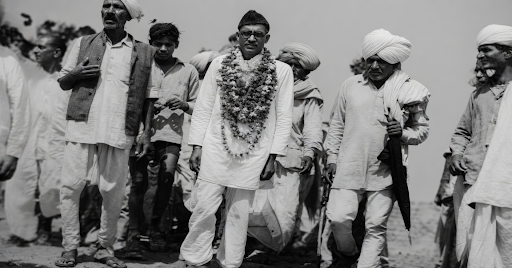
Pt. Prem Nath Dogra at the Praja Parishad Convention in 1951
Detailing the highly unfortunate situation being created by internal and external elements, Pt. Ji reminded the delegates present at the convention and also the common people that all of them carry a special responsibility to save this State for India’s sake as this huge State of J&K was built by their ancestors with their blood, flesh and bones. He opposed the controversial moves and slogans meant to distance the State from the rest of India and the efforts towards the creation of a separate constitution. In this situation, Pt. Ji observed that “there seems a dire need for a struggle for which we all should prepare for a great cause.”
Pt. ji concluded his speech with a warning :
“Na Samblo Gae Tou Mit Jao Gae, Ae Zanat Nishan Walo, Tumari Dastan Tak Bhi Na Hogi Dastano Mae”. The Praja Parishad had to struggle hard to frustrate the separatist designs of the Sheikh and his companions in the Congress, leftists and others. The creation of the district Doda and many other wrongs committed under communal considerations, led to resentment against the Sheikh Govt. This also contributed to the popularity and rise of the Praja Parishad. The Parishad, as one of the most important National Parties of Jammu & Kashmir, opposed the setting up of a separate Constituent Assembly for the State. It favoured the application of the Union’s Constitution to Jammu & Kashmir by a single stroke. But due to the peculiar conditions prevalent in the State, a special session of the party working committee was held on the 8th of May 1951, where it was decided to contest the elections. Every ill-conceived move of the Sheikh Administration, coupled with large scale rejections of nomination papers of the Praja Parishad candidates for the Constituent Assembly, compelled the party to boycott the elections. Thus, a stage was set for a long drawn struggle.